To mark 4o years of Hounds of Love we’re putting together a time capsule each day for the month of September – a daily miscellany of the people, events and objects that relate to this momentous work, whether back in 1985 or right up to the present day…

Hounds of Love – person of the day
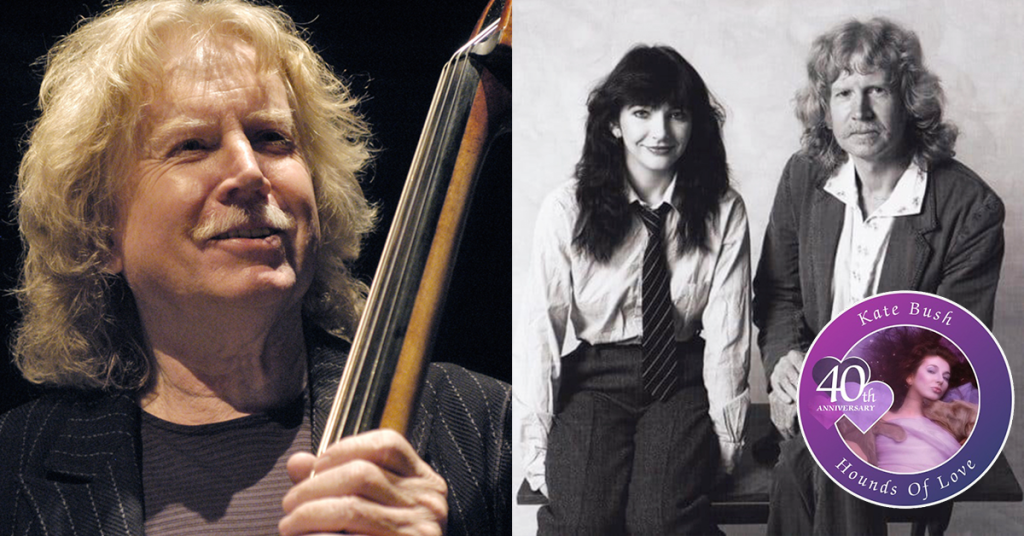
A lovely example of a lasting, mutual appreciation between Kate and another musician. In a 1985 interview, Kate was enthusiastically recounting the process of sending tapes to Eberhard Weber, her favourite ECM artist, and then joining him in her studio to run through his parts. “I must say, it’s just delightful to be able to work with people you’ve admired. The parts are very much his. I would only question a note here or there, only because of my stubbornness… how I see things. But what I love is his personality, which exudes through everything he does. Beautiful, consuming sounds. So emotional. And, really, you ask people like that to come in so that you can steal that little bit of personality and put it on your track.“
A German double bassist and composer, Eberhard was always known for his highly distinctive tone and phrasing. His compositions blend chamber jazz, European classical music, minimalism and ambient music, and are regarded as characteristic examples of the ECM Records sound. He first heard from Kate out of the blue in 1982, while returning to his hotel in Hamburg after a concert, the receptionist handed him a note with a telephone number written on it. “A certain Frau Busch called while you were out.”
From Eberhard’s biography, A German Jazz Story: “Busch, Busch, a Frau Busch – who could that be? A number with the UK country code – 0044. Calling back didn’t help – there was no answer. I had to wait until I returned home and mail from England landed in our letter box. Frau Busch turned out to be Kate Bush. We exchanged telephone numbers and were able to communicate verbally from then on. With neither the Internet nor mobile phones available back then, communication was often more complicated and protracted than it is today. Needless to say, I knew Kate as a popstar after all, Maja, my wife, was a fan of hers and owned a few of her LPs. I knew of Kate’s exceptional voice and talent for arrangements.
Surprised that she knew my music and claimed to be a big fan of ECM, I became curious about her reason for contacting me. She then let the cat of the bag and asked if I could fly to London to record a special bass melody which I was to think up for one of her tracks. Next, she sent me a tape – I can’t recall the medium, probably a DAT. I thought of a few possibilities that matched her voice, scheduled a date for the recording and flew to London. When I arrived at the airport with all of my junk, she was there to pick me up in person with one of her brothers, and we drove to her flat…”
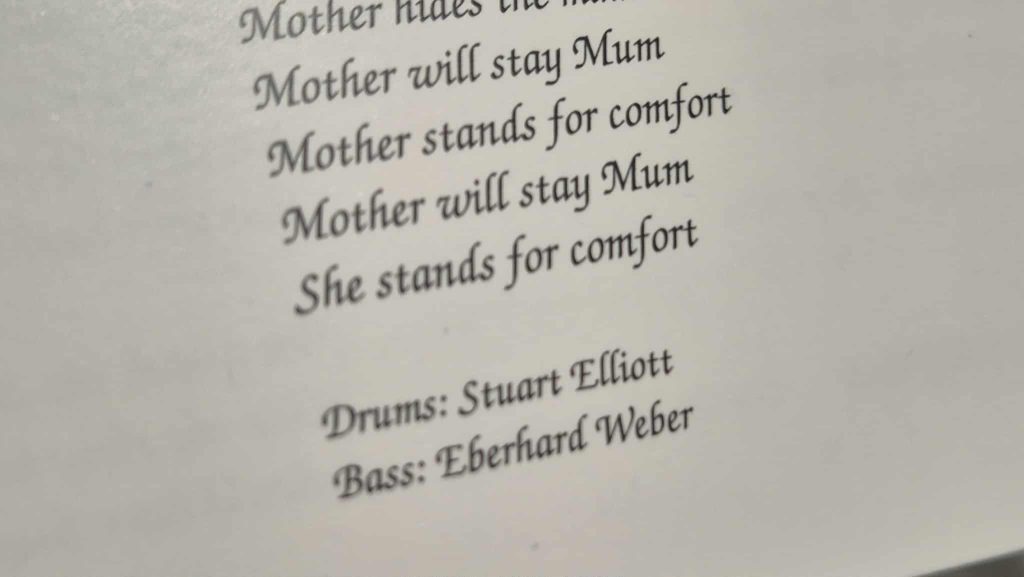
Eberhard played exquisite double bass on Houdini for The Dreaming album and was later called up again for the Hounds of Love sessions. “This time, I didn’t have to prepare anything in advance. I was flown in to record straight onto the tape. That, too, worked. Maja came with me this time. She and Kate had a lovely conversation in the evening.” You will hear him on Mother Stands for Comfort and Hello Earth. Eberhard also played on The Sensual World and Aerial – recordings for the latter carried out at Kate’s home studio with Eberhard treated royally as Kate’s house guest. Despite a debilitating stroke seriously impacting his playing career in 2007, Kate did find another lovely way to feature her German friend in her work.
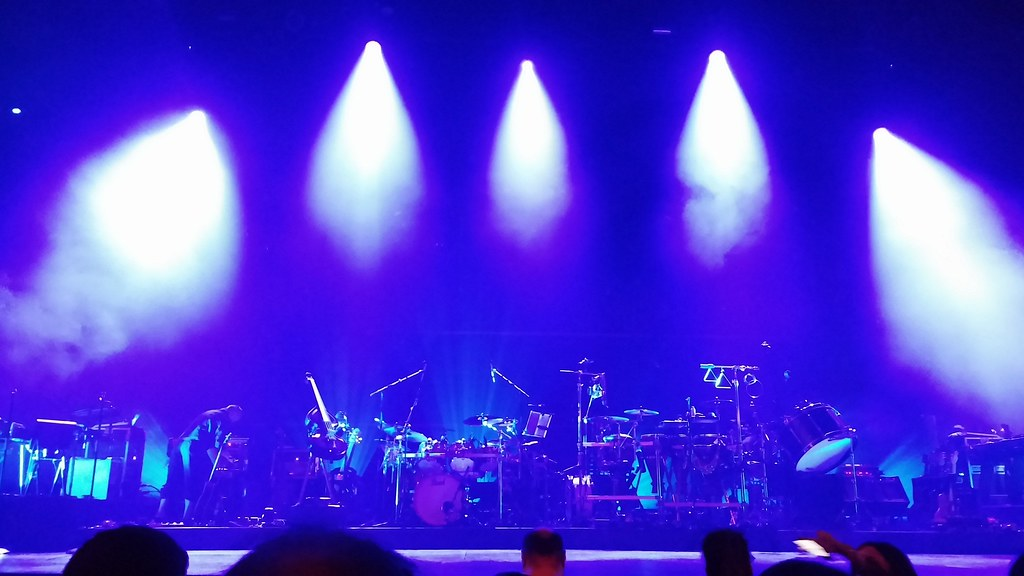
From his biography: “During one of our cosy evenings together, over a wonderful meal accompanied by several glasses of red wine, Kate hinted at the fact that if she was ever to give concerts again, she would want me to be there. When I found out in the summer of 2014 that the time had finally come, and Kate was going to get back onstage for the first time in thirty-five years, my phone didn’t ring – I had told her long ago that my musical career had been cut short. Instead, I later received an email from her. What she wrote moved me: “Did I tell you that we played your stunning Pendulum CD in the venue before each and every show as it’s my very favourite album!” So I had been there all the same! Right from the start I have found Kate to be a truly endearing person, warm-hearted, generous and humble. Even if I wanted to, I wouldn’t be able to think of anything negative to say about her. My detractors will be shocked: Weber, the eternal critic, is full of praise! She reacted splendidly to my strokes of fate – my stroke in 2007 and the sudden, unexpected death of my wife Maja in 2011. An admirable, exceptional woman.“
Hounds of Love – happening of the day
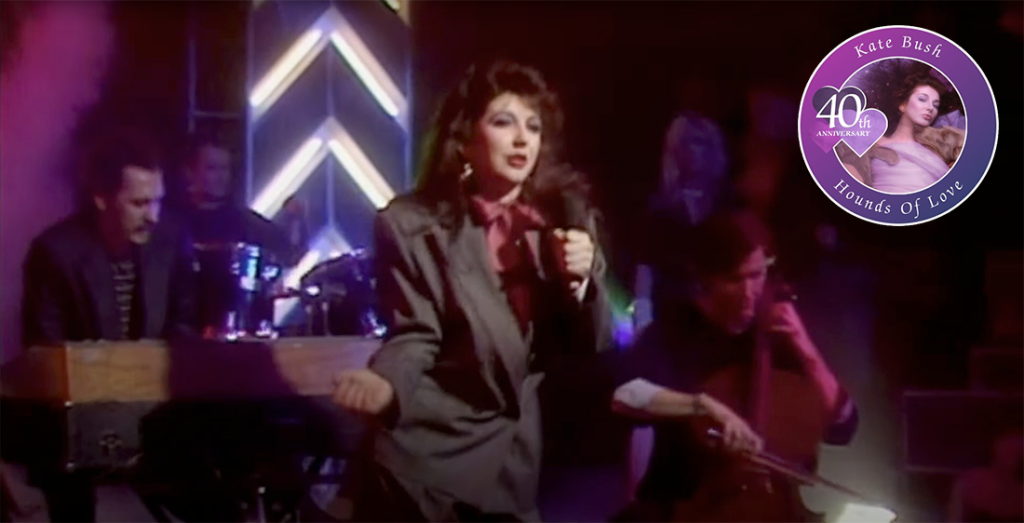
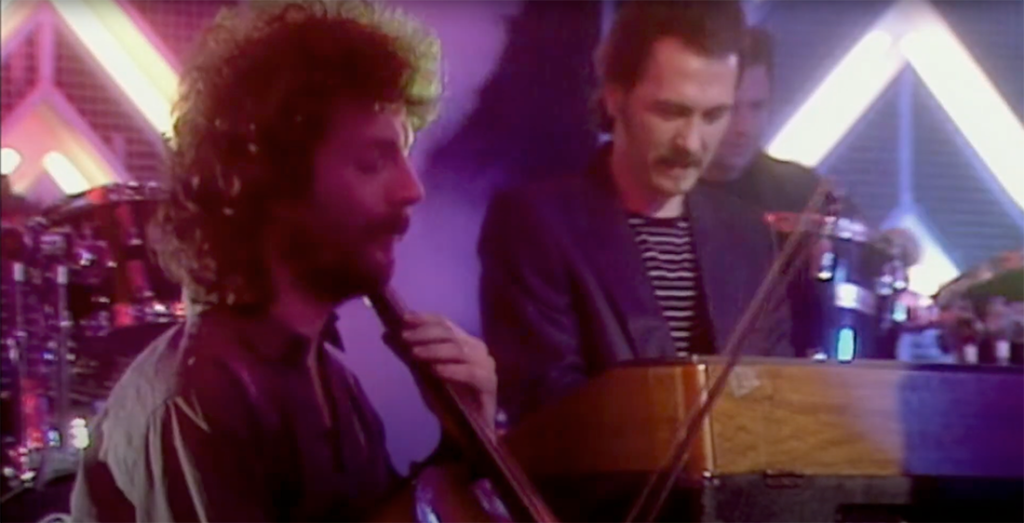
Kate’s third release from her album, the title track, was issued as a single in the UK on February 17th 1986, and spent 5 weeks in the UK singles chart. On 6th March, Kate performed a great performance of Hounds of Love (lip-synched of course) on the BBC TV programme Top of the Pops, with plenty of personality, backed by Paddy Bush and Jonathan Williams on double basses, Del Palmer on keyboards, and both Stuart Elliott (on the left) and his brother Lindsay Elliott (on the right) whacking those drum kits. Both brothers would be seen on double drum kit duties again in The Big Sky video, filmed at Elstree studios just a couple of weeks after this TV performance.
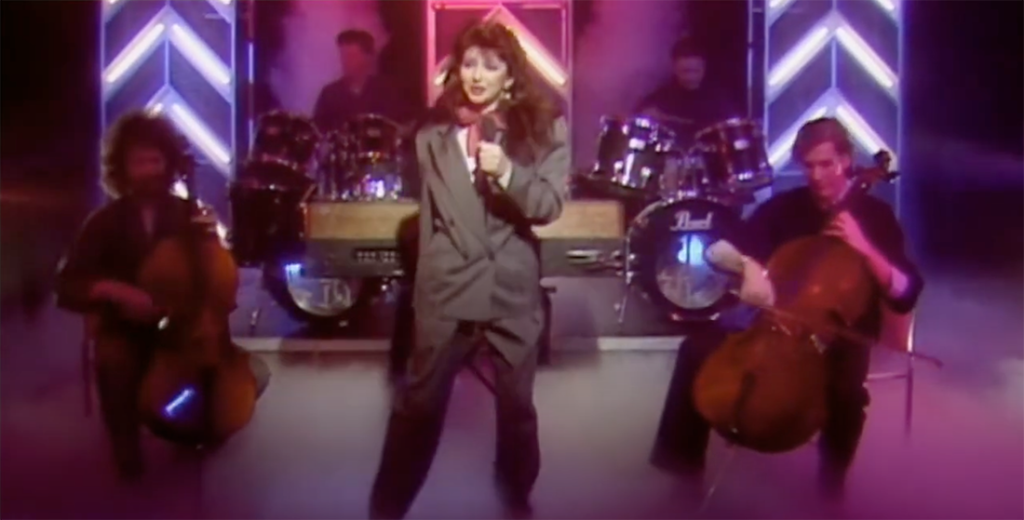
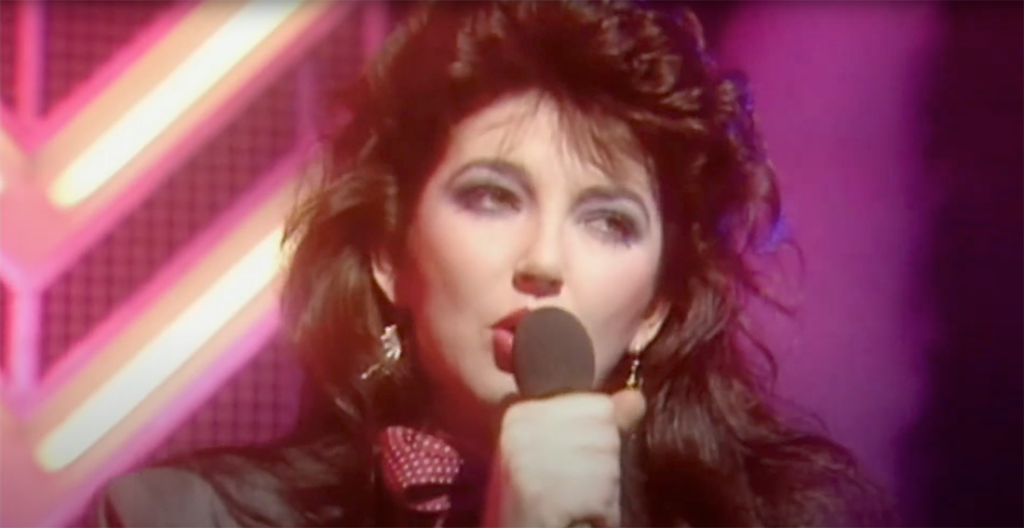
The single (then at it’s peak position of #18) actually dropped to number 24 the following week (these things were really important then!) but regardless, 1986 would of course continue to be a wonderful year of success for Kate, chartwise. This would be Kate’s last appearance on Top of the Pops for another 8 years, when she surprised fans by performing her single, And So Is Love, from The Red Shoes album on November 17th, 1994, her last time on the show.
Hounds of Love – artefact of the day
(Brought to you in association with katebushcollectibles.com)
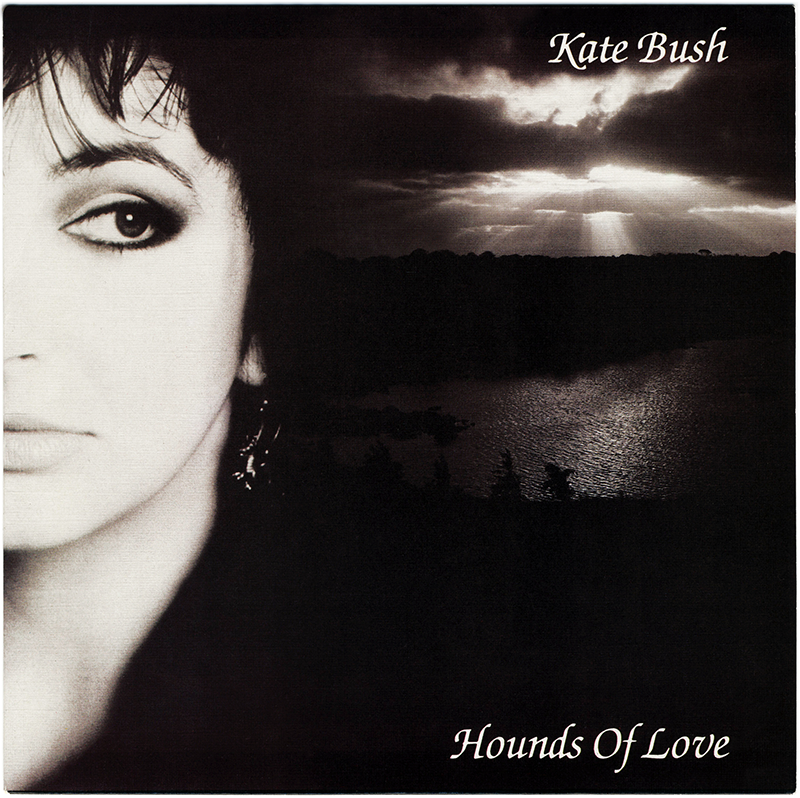
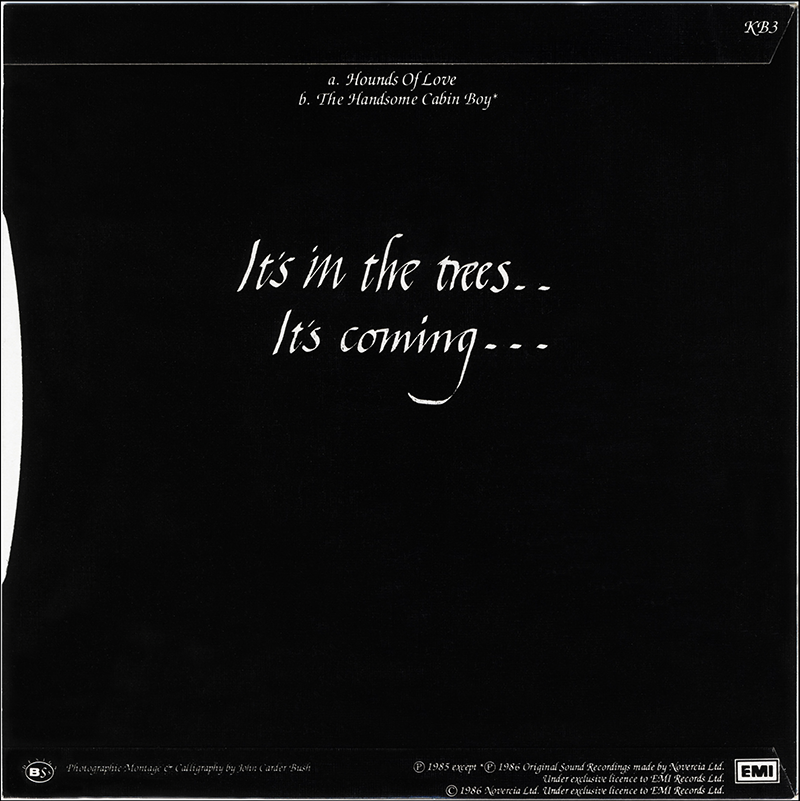
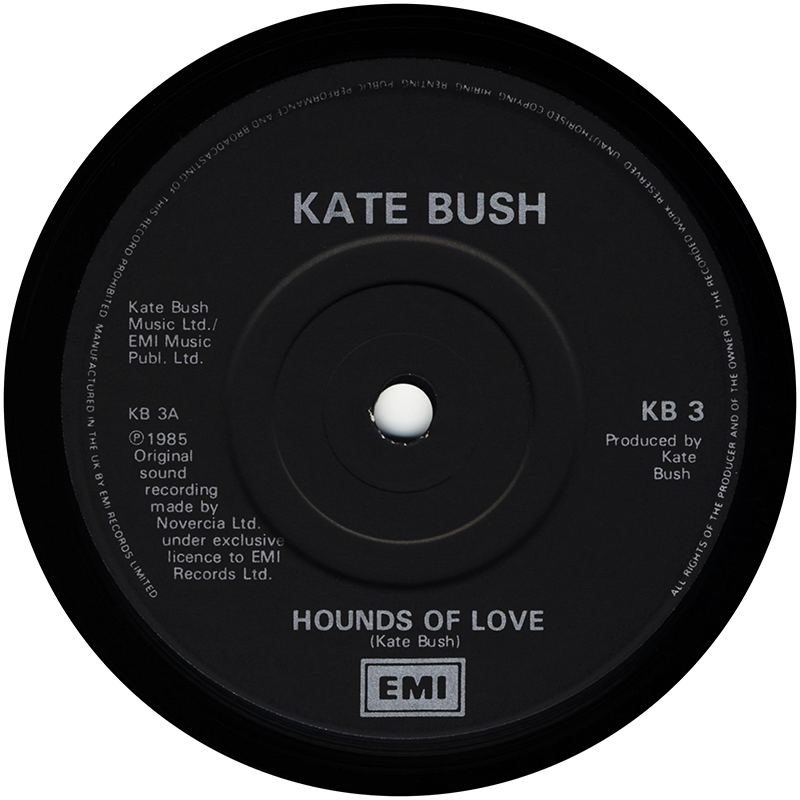
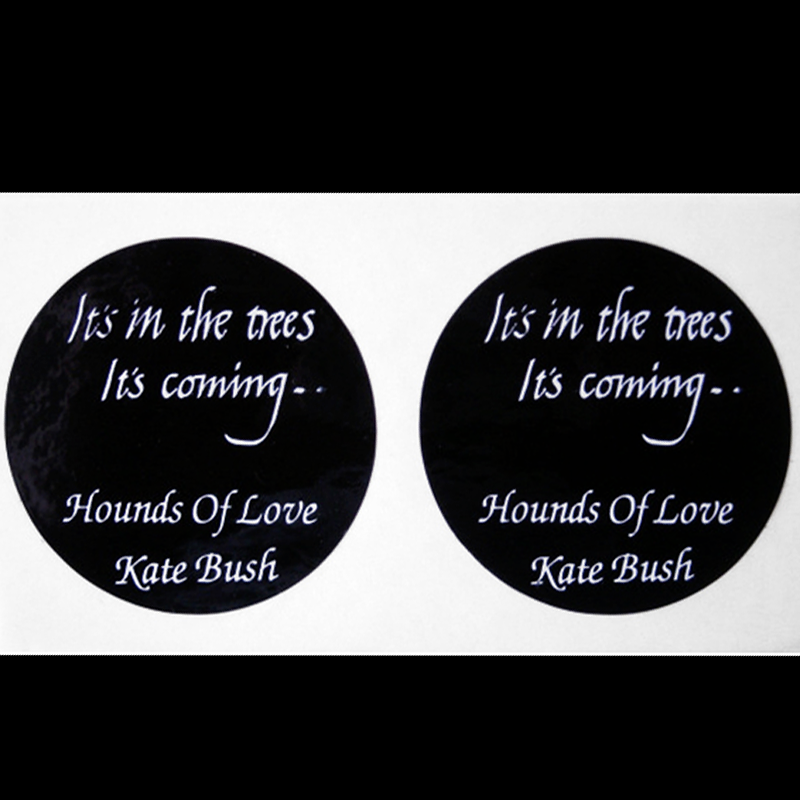
Kate’s third single from the album, the title track, Hounds of Love, was released in the UK in this nice textured sleeve 7″ vinyl. If you were lucky to catch the first run of these, they were issued with a limited pair of black stickers with the title on it. (Seán would love a copy with these stickers, readers, so do let him know!). The front cover features a portrait of Kate by her brother John Carder Bush. From his book, Kate: Inside the Rainbow, John writes: “We created the ‘Hounds of Love’ single cover using a composite with a shot I took of a sunset over Lough Corrib in the west of Ireland, and a studio shot of Kate. I am always fascinated by how halving a face can produce yet another dynamic interpretation of the same portrait.“
Hounds of Love – trivia of the day!
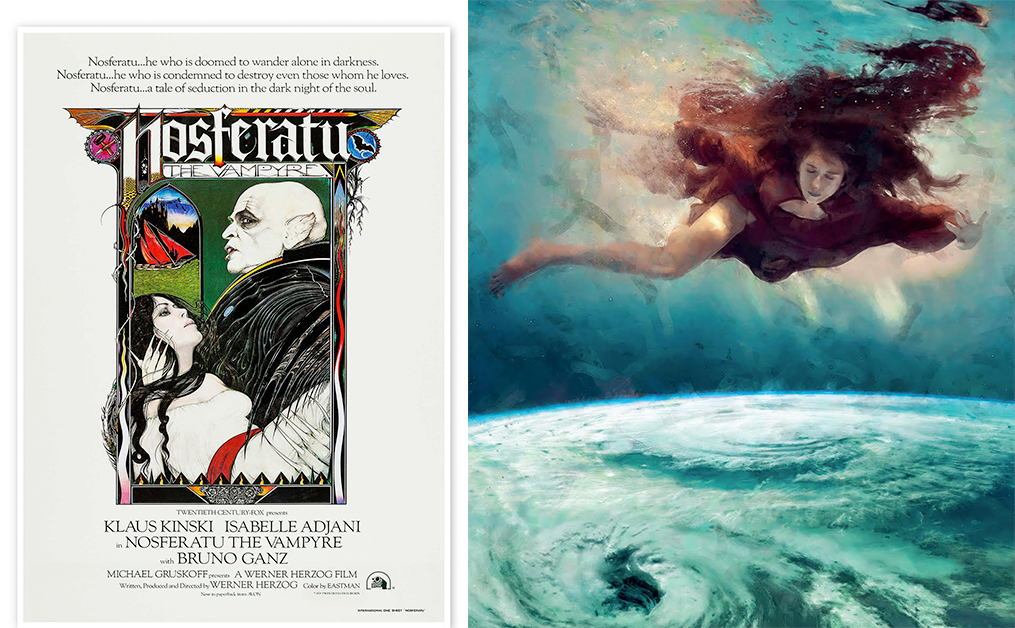
The chant heard after the choruses of Hello Earth is a Georgian song called “წინწყარო” (Ts’ints’q’aro, often transcribed as Tsintskaro, meaning “at the spring water”). Kate had first heard it in the 1979 Werner Herzog film Nosferatu the Vampyre, which uses a 1978 recording by the Rustavi Ensemble with soloist Hamlet Gonashvili.
A few years back, I was invited to speak at a panel in Dublin during a playback of the Hounds of Love album and I asked Kate’s brother, John Carder Bush, if he had any anecdotes about the making of the album that I could share. One thing he wrote to me about was the Nosferatu music:
“As you know, the choral piece from ‘Hello Earth’ was the result of watching Herzog’s ‘Nosferatu’ and being enchanted by the Georgian choir. However, at that time, we did not know where the music originated from, and it was my job to track it down. I couldn’t get hold of Herzog, but I managed to speak on the phone with Florian Fricke in Munich, who, with ‘Popol Vuh’ had been responsible for the original music in the film. His initial enthusiasm to be speaking with Kate’s brother about the music in the film diminished rapidly when I pointed out that it was not his music we were interested in but the bit of choral church music. He had no idea where it came from, or if he did he wasn’t going to tell me, but dismissed it as folk music. Well it didn’t sound like folk music to me, but more like Greek or Russian Orthodox church music.
By chance, the old Church nearly opposite the Farm had been taken over by the Greek Orthodox church, so I set off with a cassette player to find the resident priest. Not so easy as he did not open the church every day; I eventually found him with his family in a council maisonette. Of course, he could not speak a word of English, but I played him the music, and he just grinned at me through his beard and shook his head. In the end it was transposed from the film’s soundtrack because we had ground to a halt in finding anything else out about it. Those were still the days of books and telephones, word of mouth and obscure record shops. Today, I would have had the answer in a minute. I still find the piece, whether Kate’s version or the original, terrifyingly beautiful.” – Fascinating. Thanks, as always, John!
Leave a Reply